AGP Executive Report
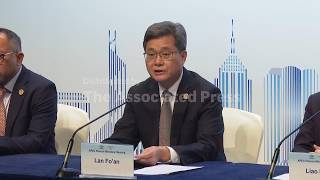
Last update: 2 days agoIn the last 12 hours, coverage in PNG’s tech and public-sector space has been dominated by digital transformation and AI governance themes. The Lae City Authority launched ServiceLink, a long-awaited online platform intended to reduce queues and let residents and businesses apply for licences/permits, pay taxes and fees, lodge complaints, and track applications from phones or computers. At the same time, the PNG Media Summit 2026 highlighted how government and media are approaching new tools: the ICT Secretary said the Starlink licence was already issued, and described digital ID access via the Service Wallet app (with biometric verification and AI used to streamline services while keeping human oversight). A related panel discussion also pushed for stronger oversight of AI tools used across government—especially around data privacy, accountability, and the risks of uploading sensitive citizen information to offshore cloud systems.
Also in the last 12 hours, the “AI + connectivity” thread continues with attention to how new infrastructure could reach remote communities. Multiple items around Starlink and nationwide connectivity appear in the broader 7-day set, but the most recent evidence ties the licence and digital service direction directly to summit messaging and implementation plans. Separately, there’s a clear “technology in society” angle beyond connectivity: the summit coverage stressed ethical AI use in newsrooms (e.g., using AI for transcription/translation/summarisation and rumor verification while keeping editorial control), reinforcing that the policy conversation is not only about adoption but also about trust and information integrity.
Outside pure tech, the most recent business and infrastructure items provide context for how PNG is positioning investment and modernization. A corporate update says Reds10 Group has invested in a steel fabrication specialist (ESL Fabrication Engineers), explicitly linking the move to “advancing technologies” and integrating AI across the business—suggesting a broader push toward tech-enabled industrial capacity. Meanwhile, other recent coverage (from slightly older in the week) shows the government’s continued focus on enabling frameworks for growth, including SEZ licensing rules (only four zones are fully licensed; others are approved in principle but not yet licensed), which matters because it affects what incentives investors can actually access.
Looking across the full 7-day range, there’s also continuity in PNG’s “systems upgrade” narrative—spanning connectivity, payments security, and service delivery. For example, BSP’s phase-out of magnetic stripe cards (moving customers to chip-based Kundu cards) is part of a broader anti-fraud and digital payments modernization effort, while earlier items also point to Starlink’s rollout as a pathway to reduce reliance on towers/fibre in rural areas. Taken together, the evidence suggests PNG’s near-term tech agenda is converging on three practical pillars: (1) wider connectivity, (2) safer and more accountable digital services (including AI governance), and (3) stronger enabling rules for investment and infrastructure—with the latest 12-hour reporting providing the clearest snapshot of how those pillars are being framed publicly.
Note: AI summary from news headlines; neutral sources weighted more to help reduce bias in the result.